The Manifold (draft)
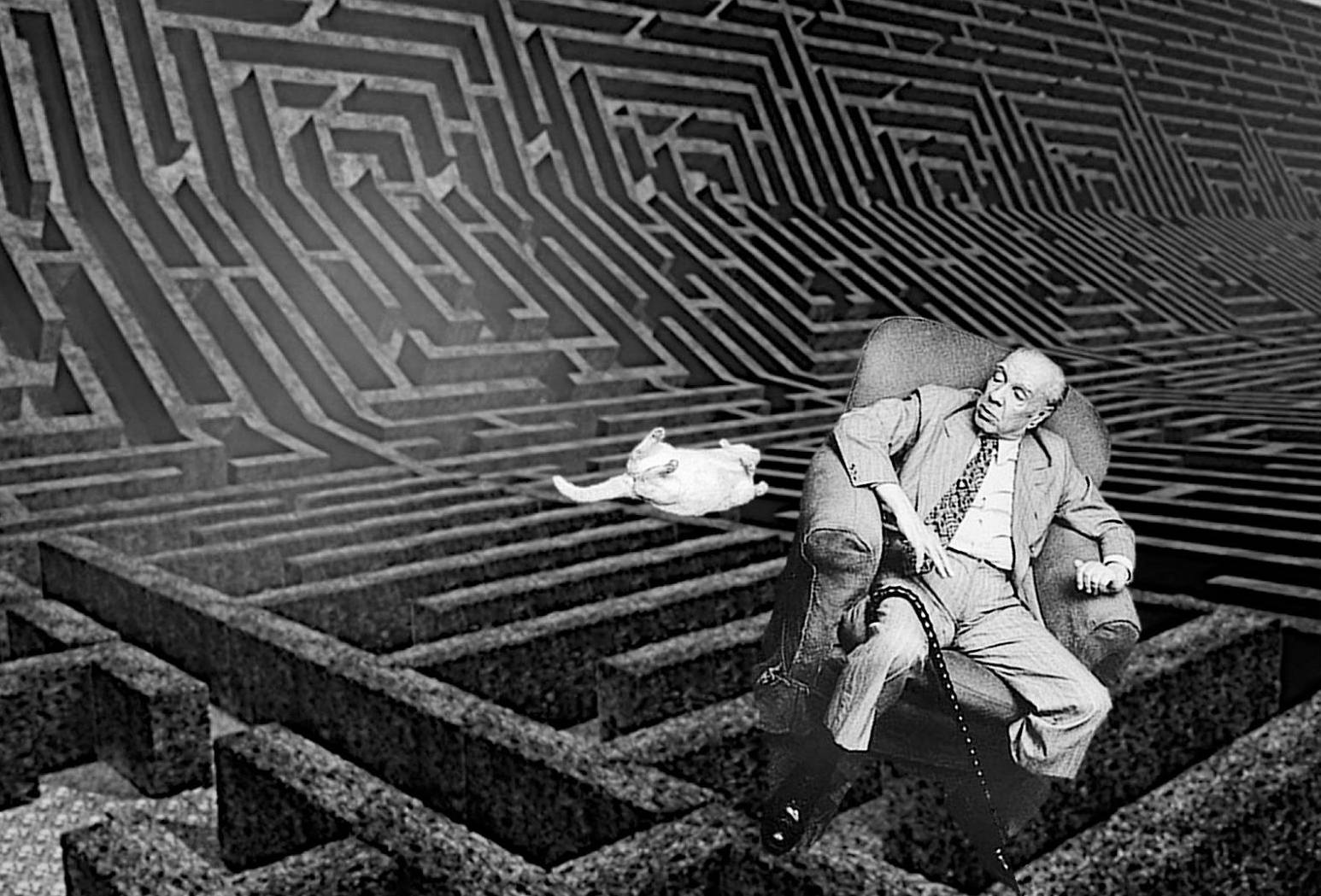
We live in one of a large set of potential realities. Let us refer to this set of potential realities as the Manifold. The manifold is theoretically infinite, with countless combinations of countless versions of yourself in countless positions. Nevertheless, the Manifold each moment is converted each moment to a single set of conditions, let us refer to that as the Circumstance.
A Circumstance has Agents, engaged in a series of relationships, exchanges, habits, and customs that we will term the Configuration. Not every possible circumstance of the Manifold is sustainable, due to the laws of physics, material possibility, and atemporal physical rules, which we will term the Logos, but also because it may not be able to be sustained by the laws that govern the range of possible physical circumstances, the Stasis, or by the impact on the Stasis of actions by Agents if they had a different set of beliefs, stories, and rationalizations, or Ideology. In fact, the range of possible circumstances is limited by the ability of the Configuration to support them. The creation of new kinds of Stasis or Ideologies, or the discovery of new elements of the Logos, can expand the shape of possible manifolds as others may collapse the shape of possible manifolds. Therefore, all actions create or destroy, that is to say they Generate or Collapse, the space of potential circumstances in the Manifold, by changing the Configuration.
We cannot see the Manifold, but we can evince elements of each, sometimes one from the other. We may use the Logos, through what we term ‘first principles’ thinking to imagine configurations that can support a set of circumstances. We may use an assessment of the history of Configurations to assess the range of possible Configurations. We may assess the set of current Ideologies and historical Ideologies to assess the impact of views on configurations, nonlinear dangers in the manifold to which taboos are the lessons of former dangers, and the degree of simplification required to create a stable configuration or circumstance.
Each Agent has a View on the shape of the manifold, which is a subset of the Manifold. The purpose of culture is to shape our view of the Manifold to reduce its dimensions so it is easy to process, leads to predictable outcomes, and avoids bad outcomes. The View is powerful as a mechanism of control in that it turns an Agent into an independent actor that will collapse the shape of the Manifold. Views and rationales of Views need not be correct or true; rather they are selected based on their effectiveness in being replicated and surviving the unfolding of Circumstances. The View will have an Ideological component, expressed in stories, myths, beliefs, and rationalizations. But it will be equally expressed in the Stasis, through actions, rituals, and habits, as well as punishment or reward given to particular actions. Any view of the Logos is just a view, and it is inevitable that Ideology & Stasis will creep into what is viewed as the immutable Logos, as individuals will backsolve to a single expression of the Manifold as the only expression that was possible on the basis of “natural law”. Therefore, there will always be Stasis masquerading as Logos; in fact, this is necessary to “deify” Stasis in the lens of Ideology, making Agents believe they are no longer actors, but expressions of a Divine Logos. So, we can add Views, as the discrete example of Ideology, to state that the Logos, the Configuration, and the Ideology of Actors shape the space of potential circumstances.
Engaging in reality is challenging, because we cannot see the full Logos, Configuration, or even the limitations of our Views that channel our potential manifold. Ergo, the challenge of epistemology in this reality is partial agency (you cannot create the Manifold alone), with partial knowledge (you cannot see the full Logos), partial information (you see only a fragment of the Circumstance), which create, along with culture, habits, and other influencers a highly limited View.
All Ideologies are sets of Views attempting to shape the Manifold. They likely represent perspectives that reflect a particular ecology of circumstances and configurations and a process by which they were selected. They may have a truth to them, tied to the ecology of those who believe them, but it is dangerous to conflate them with any kind of truth. It is quite possible the purpose of our logical expressions are justification rather than principle guiding our actions. Beliefs can indeed be useful and guide better actions, but they can also, in part, be tied to a simple explanation of phenomenology, to the need to internally reconcile contradictions of thought, to self-justify and aggrandize, and also to seek consensus.
Where principle is of use, it is quite possible that it is in the domain of the derived and the empirical rather than as any driver of philosophical living. Following Godel, yes there are things that are true that we cannot prove and no system can prove its consistency, but moreso, any system we derive is only as good as its assumptions. And there is no rational intuition, so the only way that we can create useful assumptions is through empirical knowledge. We cannot cogitate the assumptions that are at the foundation of truth, but we can live them, experience them.
Complicating this further is the fact that you are an artifact of the Manifold, a single distillation of circumstance into a state encompassing your mind, your body, and your intellect. We all are. Our genes, our loves, our hates, our habits are echoes of what came before. We are drawn to what our natures crave, tempered and shaped by what our parents, culture, teachers, and peers have showed us to value or shun. We each are internally a set and system of rewards and habit loops, that are an expression of this training and the decisions we made to conform, rebel, explore, and reflect.
We imagine that we have a soul, but it is possible that what we have is the potential to have a soul -- the potential to have a part of ourselves that critically explores the manifold and attempts to discern, through an understanding of Logos & Circumstance, an internal Circumstance, a logos of action, a Praxis. But a soul must begin with the cultivation of will, which we will describe as Manas.
The hunger of agents moves the world. I might say desire, as the Buddhists do, or “the love that moves the sun and the other stars” as does Dante, or even profit, as the economists do, but each feels to clinical and normative, divorced from the raw violence of our drives. This violence is our vitality, and without it, our horizons may be diminished, reduced to the last men of Nietzsche (the time will come when we can never shoot the arrow of longing beyond ourselves)
Don’t trust the storyteller; trust the story. Stories capture something of an essential truth of the Manifold or something of an essential structure in the minds of Agents. Stories and the truth have a far more complex relationship that simple truth and falsehood. A story is an imposition of one crystallization of narrative on events, and is never the most accurate one. But those which survive, which we tell, show something on how that crystallization interacts with ourselves as artifacts of the past manifold… what is the empty part within ourselves that seeks to believe. And if we believe, stories, even false stories, can become true, an alchemy of lie into truth that is far more powerful than the tedious collection of true facts might ever have been. But the expressions of stories may be Views or Actions, but while resonant and powerful, the most meaningful stories are the ones that shape us as Religion.
Religion, and its child, Law, are attempts to coordinate the shape of the manifold through View indoctrination & violence. Both are critical elements of it, and those who ignore one element or the other miss the purpose. Religion is an artifact of the unfolding of circumstance as we are, and it is reasonable to say that humans have coevolved, to the point where our Religion is deeply human and our humanity is structured for religion. However, this relationship is hardly representative of a single ecology or tradition. The purpose of law is to organize violence to shape the manifold, but also to determine which Actors’ property will be protected and which Actor’s property will be forfeit. The complex of Law is often tied to War, because it allows a side to organize itself coherently against a shared enemy, external to or internal to society. Often, equality under the law is only a function of the ability of both parties to render control of the other too expensive to be worthwhile or because one party has already been stripped of their resources and so the effort to deprive them of further property is no longer worth the investment. Therefore, a View of rugged independence will emerge in places with little worth taking that are geographically challenging to take, and a View of compliance and climbing will emerge in places with much to take and a geography that is easy to control.
The Stasis is the sum of current habits, cultural norms, technological methods, financial flows, and values that sustain the current Agents. The stasis is the sum of previous explorations that have been tested, refined, and have come into being. Aristocracies are the human expression of a historical Stasis. They are overfit, in their genetics, culture, and habits to a particular ecology. While the advantages of their station are used to maintain power, society will stagnate once their ability to calcify the Views & outcomes of circumstance exceeds the ability of new Actors to innovate new spaces in the manifold.
Actors will execute actions in the Manifold that their previous experiences have conferred rewards for. Note that these awards need not be based on outcomes but can be founded in social reinforcement, social awards for education in orthodoxy, or reputational awards. As a result, the values of a society, its orthodoxy and canon, will ultimately serve as a forcing function on the ambiguity of the manifold. It is critical to realize that this experience is not truly conscious, as the frames of consciousness of the actors are determined in the scope of the hunger, Views, and categories they have been shaped by the Manifold to have. Buddhists describe a mind unconsciously moved by the manifold as like an open sore. Trapped, in pain, unable to escape and see either the causes of their suffering or any path to deliverance, they are trapped to play a role in the root of their own misery.
In the Axial Age, two traditions created the possibility of human beings consciously shaping the manifold rather than being shaped by it. The first was Buddhism, which sought to extract Agents from the matrix of the manifold. This echoed down to Phyrro, Stoicism, the Mutazilites, and the Hermetics, laying the gateway for modern scientific thought. The second was Christianity, which created a possibility for an individual to move beyond the wages of entrapment through the power of forgiveness.
In some fundamental way, Civilization is a system to attempt to keep the manifold branching to new sustainable possibilities through a series of collapsing frameworks. These collapses, as rules, allow a greater range of circumstances to be sustainable. However, this greater range requires higher cognitive complexity. Therefore it is a dominant selective strategy for those of lower cognitive endowment or emotional resilience to destroy the higher range this culture creates. It is an infinite game of Carse’s. The only goal is to keep the game in play, to expand the horizon, to speak as ourselves in the spontaneity and vulnerability of becoming.
All Agents in the Manifold are artifacts of the Manifold, but also have the opportunity to be Shapers of it.
The purpose of epistemology in the Manifold cannot be Truth, any more than a penguin may seek to understand relativity. Truth is variate, and we are singular. Truth is infinite, and we are limited. Truth is beyond any Circumstance, and we are an artifact of Circumstance. But some part of us yearns for Truth, so how can we become closer to it? We must begin by warring with Circumstance.
The first element is to map our own captivity in the Manifold. We cannot be free of the Manifold, but we can use our awareness of the existence of the Manifold to begin to shape how the Manifold impacts our future Circumstance. This is the beginning of Liberty.