The Mimetic Fall
A New Take on the Fall of Man
René Girard pioneered the theory of Mimesis – that we do not look within ourselves to define the scope of our ambitions but to one another. To Girard, the travelers struck blind with envy in Dante's Purgatorio were expressing something fundamental to human nature. We are all, therefore, strangers to ourselves except insofar as we identify within ourselves the refractions of the reflected light of others.
But is this mimetic destiny inevitable? Does it fully circumscribe the range and scope of human relations and ambitions? Is humanity trapped in a closed system of imitation or can we exceed Nietzsche and not only "shoot the arrow of longing beyond ourselves" but also above the maddening din of the desires of others.
To look beyond our time, we cast our eyes far back to an age of myth. This is a treacherous path. Unless one painstakingly combs these texts, we may be easily misled. In modern transliterations and you’ll see names and words that appear that aren’t in the original. After all, our modern academics know better than the ancients what they intended to say. So the passing of the generations renders these tales, through a game of telephone, unrecognizable, continuously reappraised to be suited to modern eyes that would cast at them a dismissive glance.
But if we are willing to be something other than modern, something that like the mythological Janus has an eyes that bore both forwards and backwards, we can see new glimpses that neither science nor lore would unveil on their own. And in doing so, perhaps we can see at the human condition with new eyes and gaze farther beyond the horizon of human potential.
We begin with the Fall of Man - you know the tale. Adam and Eve are in a Garden until they are tempted to eat an apple from the tree of Good and Evil. Then, struck by shame at their nakedness, they escape the garden. Our modern sensibilities scoff — how is the knowledge of good and evil a bad thing?
But go deeper and a strange truth emerges – the original of this story was far different. The Yazidis remember the forbidden fruit as wheat and worship the being who gave it to their ancestor, Adam, as 'The Peacock King.' The Sufis lament "a great of wheat [that] eclipsed the sun of Adam. To Joyce, again, it was wheat that drove man's fall. And so, although we have long forgotten it, this myth tells us a story we know from the archaeological record — the domestication of agriculture.
Were the Yazidis right to celebrate this event, which would allow Abraham's descendants to be as numerous as the stars and to be fruitful and multiply? Or did the Judaic tradition, in rejecting this break, have a point? Thumb through David Graeber's delightful 'Dawn of Everything' and the Yazidis seem to have won the first bout. Farming societies spread across the Old World — from Ireland to Japan, from Sri Lanka to South Africa and these first farmers were innovative and tinkering and delightfully egalitarian.
But the bricks, the bones, and tablets of these societies whisper a chilling tale of what came next. In the genetic record we see societies either commit genocide against the hunter gatherers or establish a brutal caste system over them. This caste or class is defined by blood and we see incestuous unions among royals of Old Europe. In India, in both the Indo-Aryan north the Dravidian south, and among the Yazidis, we still see the endogamous marriage groups and hierarchy defined by birth.
Their laws and religion follow a similar template — a priesthood prescribes a divine orthodoxy, upholding a sacral state. Violence is prescribed against murder and theft, but also female expressions of sexuality — through stonings by delighting mobs. Most disturbingly, while the range of human brain size remains constant, the distribution skews increasingly to those of smaller and smaller brain size. We thought Idiocracy was a story of our future, but it seems it was the story of our past.
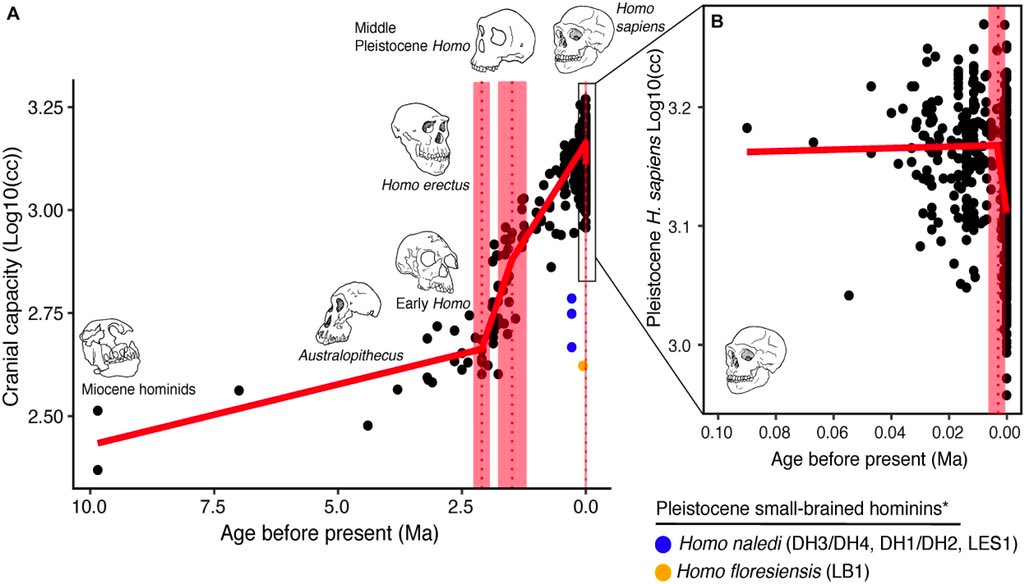
Why? Humans became mimetic — those who mindlessly repeated custom and extinguished their curiosity were better suited to till the soil in an endless cycle year after year, rooted to a single place. Girard captures these impacts well: we no longer sought the horizon, but the things of our neighbor; we no longer knew what we desired, we copied it. Tinkerers became traditionalists. And when mimetic tension grew too strong, this tension was resolved through violence, violence against the deviant and excellent, often on trumped-up charges.
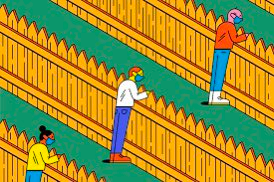
The Satanic turn brought us genocide, caste hierarchy, violence against female sexuality, orthodoxies and priesthoods, but also in the humans of its creation it instilled a deep and powerful drive — to destroy the excellent and the deviant. Because those are the people who might bring something new, something that changes the game, and our fallen humans can no longer adapt. The new domesticated humans believe that obedience will bring paradise in another world and that outliers must be destroyed in the present one.

But are we as humans circumscribed by the Fall? Are we doomed to forever trace the paths of the desires of others? To bathe in the reflected glow of the light of others? Or can we look both backwards and forwards to another pattern of being human? A way to navigate outside of the cage of mimesis?